





Shipping costs are rising, putting additional pressure on e-commerce margins. But before accepting higher delivery expenses for every order, there’s another question worth asking: Are you using the right shipping method for every parcel?
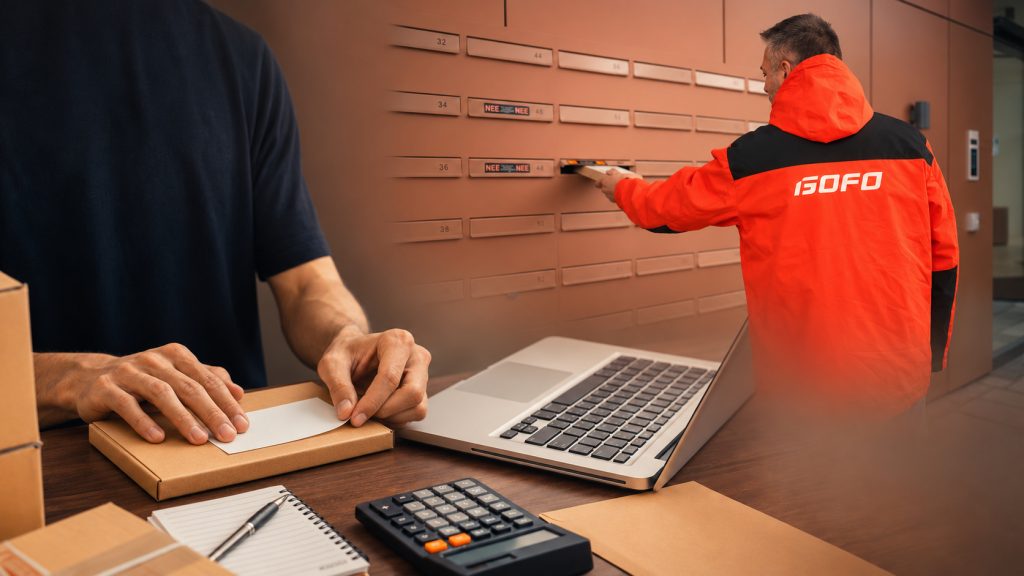
Not every small order needs standard parcel delivery. For eligible shipments, mailbox delivery offers an alternative that can combine cost efficiency with customer convenience and delivery visibility.
The opportunity starts with understanding which orders qualify, how shipping costs compare, and what switching could mean for your business.
Rising shipping costs: is your shipping strategy keeping up?
Shipping costs are influenced by several factors, including base rates, surcharges, shipment volumes and service requirements. Even relatively small price adjustments can add up for webshops managing thousands of orders annually.
For businesses selling lower-value products, delivery costs can represent a significant portion of each order’s margin.
The usual response is to look for a better shipping rate. But there is another opportunity: optimising the delivery method itself.
If you are paying for standard parcel delivery on products that could qualify for mailbox delivery, you may be spending more than necessary.
Rather than applying one delivery service to every order, reviewing your shipping mix can reveal where meaningful savings may be possible.
Does every small order need standard parcel delivery?
Not necessarily.
The deciding factor is not simply the size of the product. It is whether the fully packaged shipment meets the dimensions, weight restrictions and service requirements for mailbox delivery.
For example, GOFO Mailbox Parcel accepts eligible domestic shipments with the following specifications:
| Requirement | GOFO Mailbox Parcel |
|---|---|
| Maximum dimensions | 38 × 26.5 × 3.2 cm |
| Maximum weight | 2 kg |
| Delivery area | Netherlands |
| Delivery method | Directly through the mailbox |
Products such as lightweight clothing, accessories, books and compact electronics accessories may be suitable, depending on their final packaging and applicable restrictions.
A product that fits comfortably in your hand may still exceed mailbox thickness limits after protective packaging is added.
The important measurement is the fully packaged order, not the product alone.
When is mailbox delivery actually cheaper?
Mailbox delivery can be more economical than standard parcel shipping, but the advertised shipping rate does not tell the whole story.
A meaningful comparison should consider the total cost per shipment.
| Cost factor | What to consider |
|---|---|
| Base shipping rate | Actual contracted shipping cost |
| Surcharges | Energy, peak-season and applicable additional fees |
| Collection costs | Pickup arrangements and volume requirements |
| Packaging | Packaging materials and handling costs |
| Service requirements | Tracking, delivery times and proof of delivery |
A lower shipping rate may appear attractive, but additional collection or packaging expenses could reduce the actual savings.
Similarly, a cheaper service is not necessarily the better choice if it does not meet your customers’ delivery expectations.
The goal is to compare the total cost per shipment, rather than simply selecting the lowest advertised price.
How much could mailbox delivery save your webshop?
The potential savings depend on your shipping volume, current costs and how many of your orders qualify for mailbox delivery.
Estimate your potential mailbox delivery savings
Start with the shipments that could realistically move to mailbox delivery, then compare the two delivery methods on the same cost basis.
Identify eligible shipments
Count the shipments that meet the required dimensions, weight and service conditions.
Compare all-in costs
Compare your current delivery cost with mailbox delivery on a like-for-like basis.
Estimate the annual impact
Apply the comparable cost difference only to shipments you realistically expect to move.
Potential annual shipping-cost savings
Eligible shipments moved to mailbox delivery × (current comparable all-in cost − mailbox comparable all-in cost)
Actual savings depend on your shipment profile, agreed tariffs, applicable surcharges, packaging, collection arrangements and service requirements.
Start by reviewing your existing shipping data to understand how many orders could realistically move to a mailbox service. For example, a webshop regularly shipping small accessories may have more opportunities to reduce costs than one primarily handling larger products.
Even a relatively small saving per shipment can add up over time when applied to recurring orders. However, the actual benefit depends on both the number of eligible shipments and the difference in total delivery costs.
The goal is not to replace every standard parcel, but to identify where mailbox delivery could make a meaningful difference to your overall shipping budget.
Does cheaper delivery mean compromising on the customer experience?
Not necessarily.
Lower-cost delivery does not automatically mean losing visibility over your shipments.
Depending on the service, mailbox delivery can include tracking, delivery confirmation and proof of delivery.
As highlighted in the launch of GOFO Mailbox Parcel in the Netherlands, the service combines next-working-day delivery, real-time tracking and two proof-of-delivery photos for successfully delivered shipments, subject to applicable service conditions.
This helps customer service teams verify deliveries and respond to customer enquiries, although delivery exceptions can still occur.
GOFO also offers next-working-day delivery for eligible shipments handed over before the agreed cut-off time, subject to service conditions.
Because mailbox parcels can be delivered directly through the mailbox, recipients generally do not need to be home for a personal handover.
For webshops, the right comparison is not simply shipping price versus shipping price. It is total delivery cost versus the overall service customers receive.
Before accepting higher shipping costs, reconsider your shipping mix
Rising shipping costs do not necessarily mean every shipment has to become more expensive.
For webshops handling products of different sizes and weights, the opportunity may lie in matching each order to the most appropriate delivery method.
Start with your own shipping data. Identify eligible products, compare the total costs and calculate the potential impact on your annual shipping budget.
The objective is not to replace every standard parcel. It is to avoid paying for a standard parcel service when a smaller shipment could be delivered more efficiently.
GOFO Mailbox Parcel is available for business customers in the Netherlands, with rates starting from €2.99 per eligible shipment for annual volumes of 5,000–9,999 mailbox parcels, excluding VAT, pickup, energy and peak surcharges, and other applicable fees.
Explore GOFO Mailbox Parcel and request a tailored quote to see whether mailbox delivery fits your business.
Explore the possibilities of GOFO Mailbox Parcel
Want to find out whether your e-commerce shipments are suitable for mailbox delivery? Explore GOFO Mailbox Parcel or contact our sales team to discuss the options available for your shipping profile.