




Why the Packaging and Packaging Waste Regulation is about far more than packaging and what it means for every parcel you ship
Why is everyone talking about PPWR now?
If you sell products online in Europe, you’ve probably heard about the EU’s new Packaging and Packaging Waste Regulation (PPWR). While it’s often described as a packaging regulation, its impact extends well beyond the box itself.
Much of the recent attention comes down to timing. Because many of the headline requirements focus on future targets, businesses often assume PPWR is mainly something to prepare for closer to 2030. In reality, the regulation entered into force in February 2025, with most provisions applying from 12 August 2026, meaning preparation is already underway for many businesses.
And that’s the key point. The biggest challenge is updating the processes behind it. Reviewing suppliers, collecting documentation and adapting warehouse or ERP systems all take far longer than changing a carton design. That’s why businesses are no longer asking “When does the regulation apply?” but “Are our operations ready?”
PPWR is changing more than packaging
Although PPWR is introduced as a packaging regulation, its impact extends far beyond packaging itself. Requirements such as packaging minimisation and Extended Producer Responsibility (EPR) don’t just influence packaging design—they also affect how products are packed, how packaging data is managed and how businesses demonstrate compliance.
For manufacturers, much of this work begins during product development. For e-commerce businesses, however, it continues every time an order is packed. Every parcel reflects a series of operational decisions—from carton selection to fulfilment and reporting—making packaging part of a much broader operational process. The question is no longer simply “Are our boxes compliant?” It’s “Are the processes behind every parcel compliant?”
Why e-commerce is different
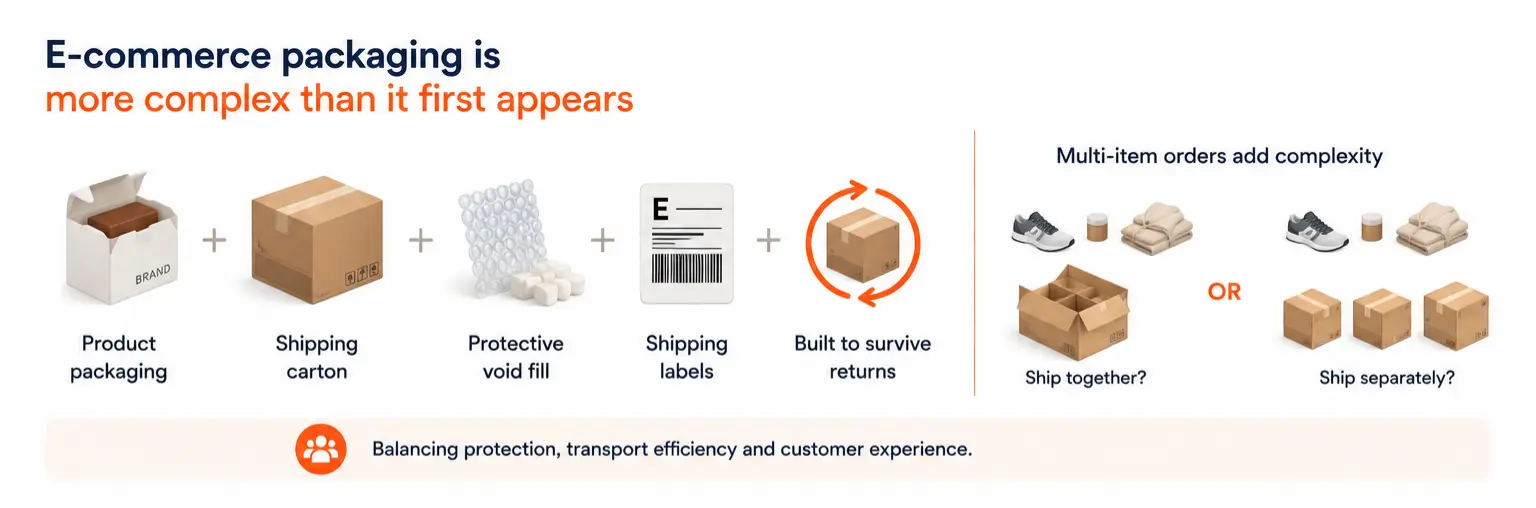
What PPWR changes behind every parcel
From the customer’s perspective, nothing has changed. An order is still placed, packed and delivered just as before.
Behind the scenes, however, making that parcel PPWR-compliant now involves much more than choosing the right box. Businesses need to make informed packaging decisions, collect supporting data and coordinate across multiple teams throughout the fulfilment process. PPWR doesn’t change the parcel, but it changes everything that happens behind it.
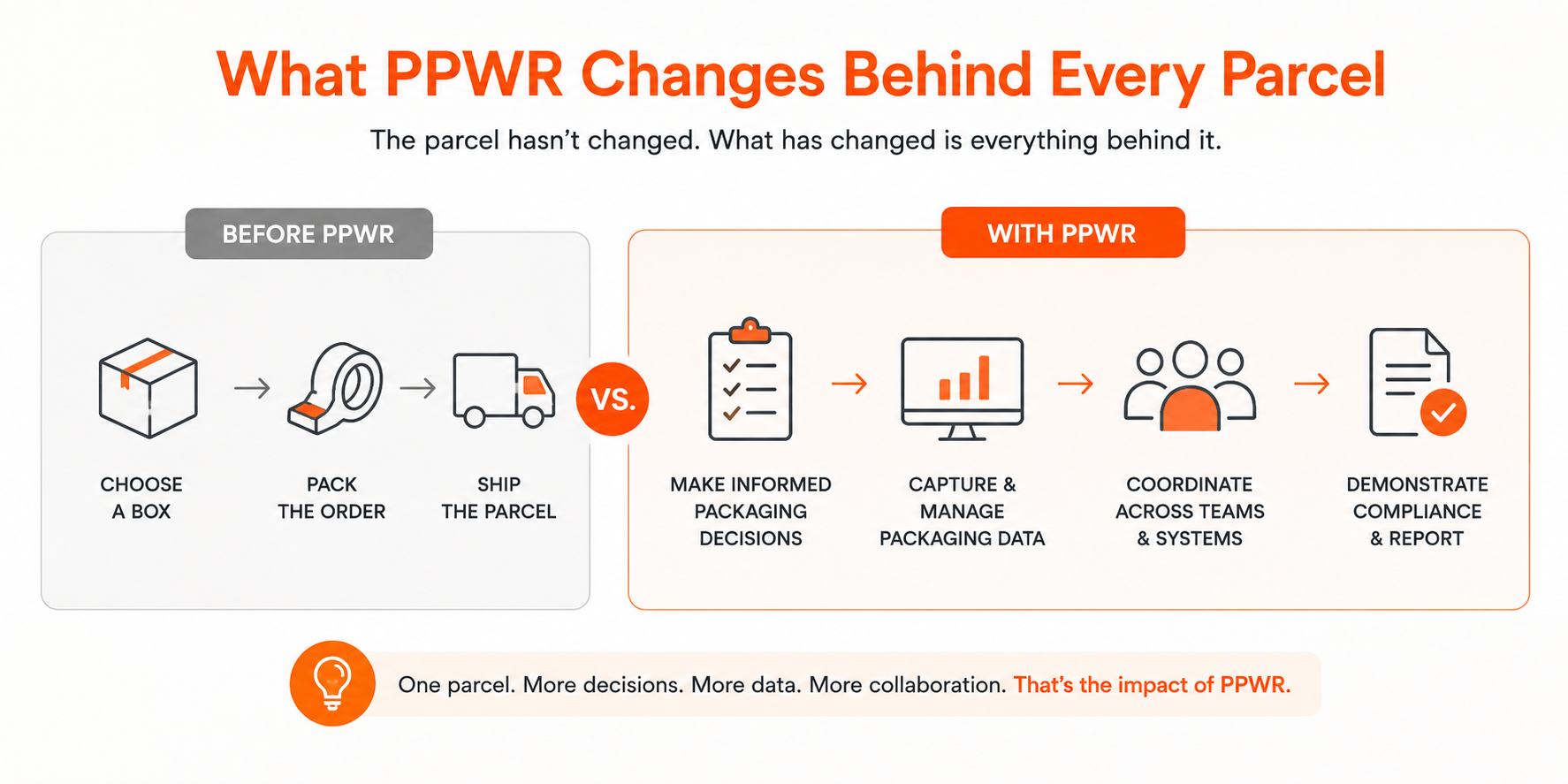
Beyond the box: where businesses need to adapt
PPWR doesn’t just introduce new packaging requirements—it changes the way different parts of the business work together. Decisions that were once made independently now rely on shared data, closer collaboration and more consistent processes. For most e-commerce businesses, the biggest changes fall into four areas.
Procurement: buying packaging means buying information
Warehouse: Packing smarter, not just faster
Data: Packaging becomes part of the operational record
3PLs: From fulfilment partner to compliance partner
The opportunity beyond compliance
PPWR may be introduced as a packaging regulation, but for e-commerce businesses, its impact extends far beyond the box itself. As packaging decisions become more closely connected to fulfilment, data and compliance, preparing for PPWR is no longer just about meeting regulatory requirements—it’s about building more efficient and resilient e-commerce operations.
This shift also highlights the growing importance of logistics and fulfilment partners. As brands adapt their packaging and fulfilment processes, reliable last-mile delivery becomes an essential part of ensuring those efforts translate into a consistent customer experience.
Why the right last-mile partner matters
As e-commerce operations become more interconnected, businesses also need partners that understand the unique demands of parcel delivery. Unlike pallet distribution, e-commerce logistics is built around high-volume, small-parcel shipments, where speed, visibility and delivery reliability directly influence the customer experience.
At GOFO, we specialise in e-commerce parcel delivery and scalable last-mile solutions across Europe. As regulations and customer expectations continue to evolve, our focus remains the same: helping brands deliver efficiently, reliably and at scale.